Cervical neuroenteric cyst at C4–C6 level is a rare intradural extramedullary spinal lesion that can cause quadriparesis due to spinal cord compression. Timely microsurgical excision and decompression are essential to prevent permanent neurological disability and restore mobility.
A 23-year-old male patient presented with progressive weakness in all four limbs and difficulty walking. Neurological examination revealed power grade 4, spasticity, and exaggerated reflexes, suggestive of cervical spinal cord compression.
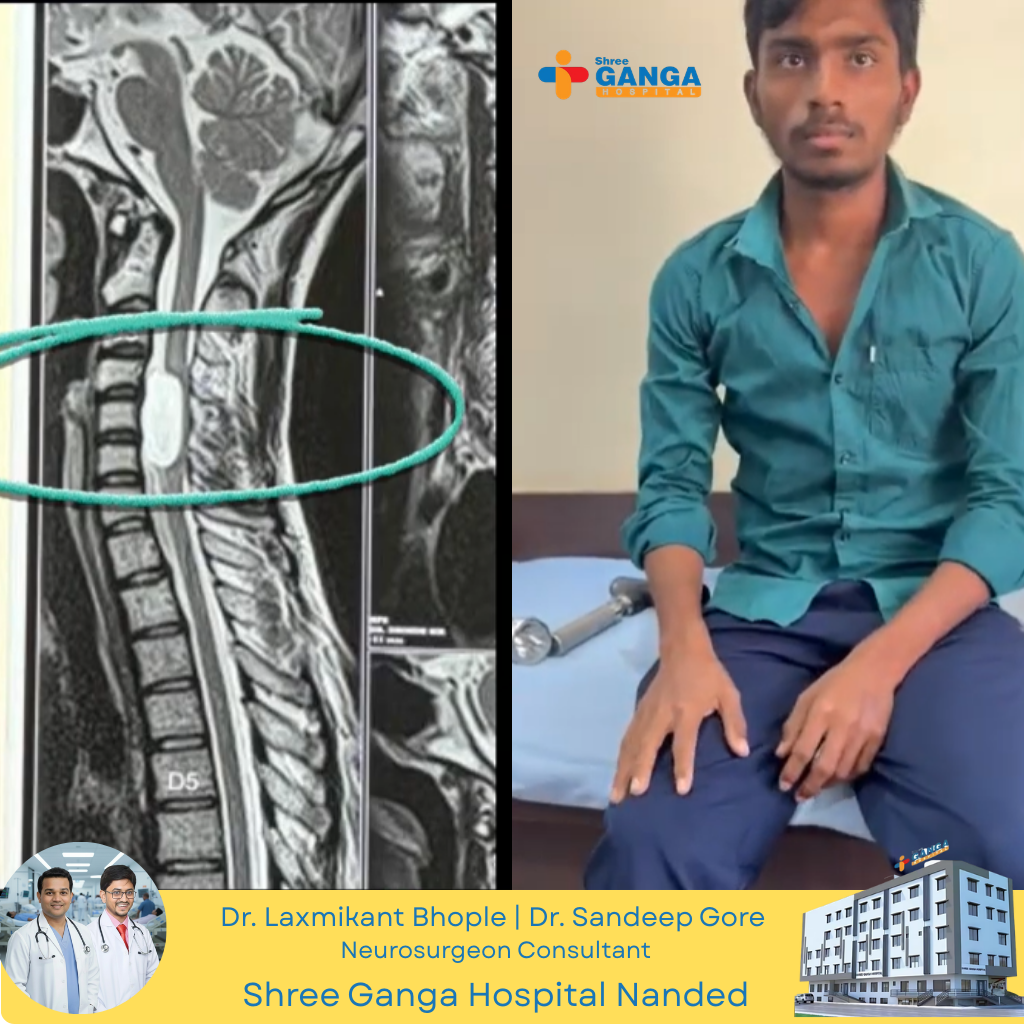
MRI Cervical Spine showed an intradural extramedullary (IDEM) lesion extending from C4 to C6, consistent with a neuroenteric cyst.
Due to worsening quadriparesis and cord compression, the patient underwent microsurgical excision of the cervical IDEM cyst under advanced neuro-monitoring techniques.
The surgery achieved complete decompression of the spinal cord while preserving neurological function.
Post-operatively, the patient showed gradual improvement in limb strength and gait. Early intervention prevented permanent spinal cord damage.
Timely Cervical Spine Surgery Prevented Permanent Disability
Considering progressive neurological deficits, the patient underwent:
✅ Microsurgical Excision of Cervical IDEM Tumor
✅ Complete Spinal Cord Decompression
✅ Neural Structure Preservation
Advanced magnification techniques and precise microsurgical dissection ensured safe removal of the neuroenteric cyst.
Post-Operative Recovery & Rehabilitation
- Gradual neurological improvement
- Reduction in limb stiffness
- Improvement in walking ability
- Structured physiotherapy program
Early diagnosis and timely intervention prevented permanent paralysis.
Why This Case is Important
Cervical intradural extramedullary tumors like Neuroenteric Cysts are rare but can cause:
- Progressive quadriparesis
- Gait imbalance
- Permanent spinal cord injury
- Loss of mobility
Delaying surgery may result in irreversible neurological deficit.
Timely cervical spine decompression surgery ensures better functional recovery.
A 23-year-old male with quadriparesis due to C4–C6 intradural extramedullary neuroenteric cyst underwent successful microsurgical excision and spinal cord decompression. Under expert care by Dr. Laxmikant Bhople and Dr. Sandeep Gore, timely cervical spine surgery prevented permanent disability and restored neurological function.
C4–C6 पातळीवरील Cervical Neuroenteric Cyst (IDEM Tumor) मुळे स्पाइनल कॉर्डवर दाब येऊन 23 वर्षांच्या रुग्णाला चारही हात-पायात कमजोरी (Quadriparesis) आणि चालण्यात अडचण निर्माण झाली होती. वेळेत MRI निदान करून तज्ज्ञ न्युरोसर्जन Dr. Laxmikant Bhople आणि Dr. Sandeep Gore यांनी सूक्ष्म (Microsurgical) पद्धतीने गाठ काढून स्पाइनल कॉर्डवरील दाब पूर्णपणे कमी केला. यशस्वी Cervical Spine Surgery मुळे कायमस्वरूपी अपंगत्व टळले आणि रुग्णामध्ये न्यूरोलॉजिकल सुधारणा दिसून आली. वेळेत निदान व शस्त्रक्रिया केल्यास स्पाइनल कॉर्ड कॉम्प्रेशन आणि लकवा टाळता येऊ शकतो.
Click here to Watch Video
What is a Neuroenteric Cyst?
A neuroenteric cyst is a rare congenital spinal lesion that can compress the spinal cord and cause neurological weakness.
What are symptoms of cervical spinal cord compression?
Weakness in hands and legs, difficulty walking, stiffness, numbness, and imbalance.
When is cervical spine surgery required?
When MRI shows significant spinal cord compression with neurological deficits.
Can quadriparesis recover after surgery?
Yes, if treated early, neurological recovery is possible with surgery and rehabilitation.
 Consultant Neurosurgeon with spine surgery expertise