Advanced Neuro Emergency Care by Dr. Laxmikant Bhople and Dr. Sandeep Gore
Brain Hemorrhage
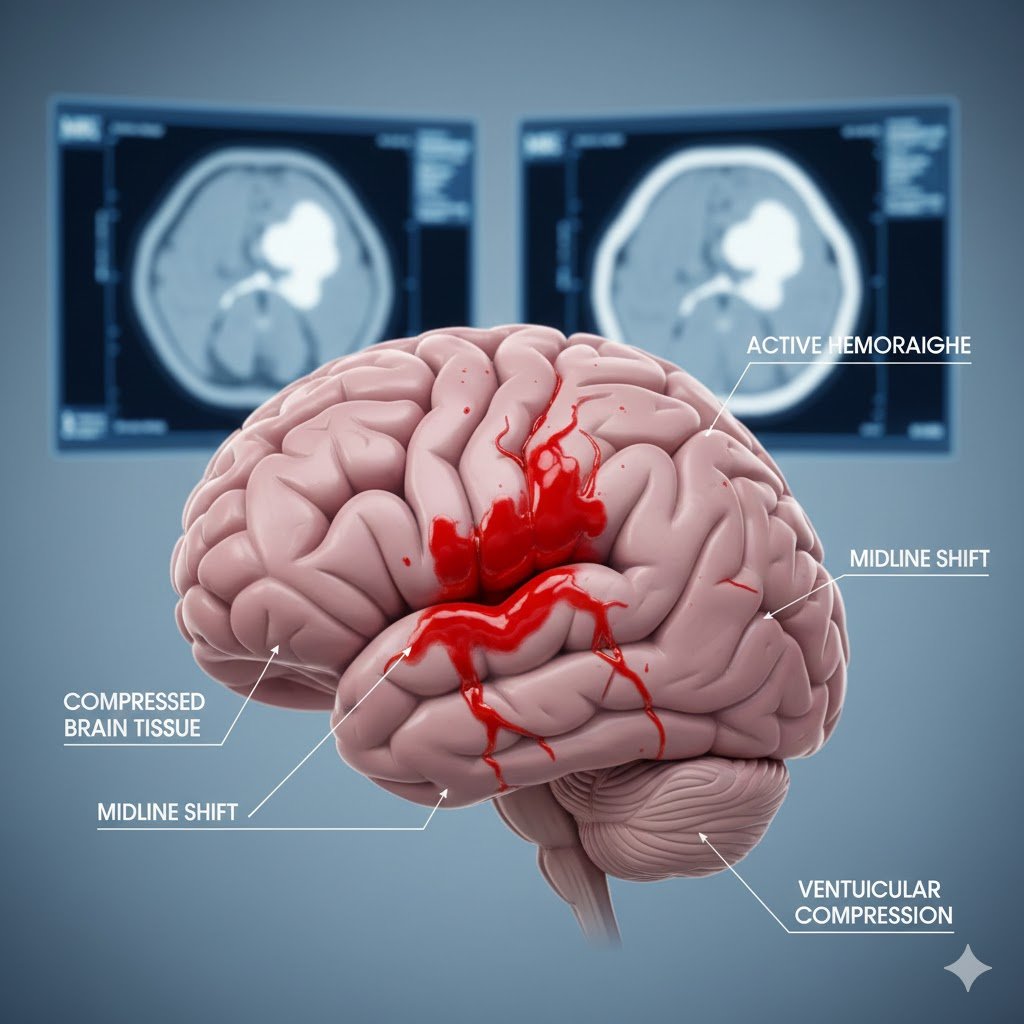
A brain hemorrhage, also known as intracranial bleeding, occurs when a blood vessel ruptures inside the brain. As a result, blood accumulates and puts dangerous pressure on brain tissue. In many cases, this condition becomes immediately life-threatening and requires urgent neurosurgical intervention.
Depending on the location and severity, brain hemorrhage may occur due to high blood pressure, head injury, aneurysm rupture, stroke, or blood clotting disorders. Therefore, early diagnosis and rapid treatment are critical to prevent permanent brain damage or death.
With this emergency nature in mind, Dr. Laxmikant Bhople and Dr. Sandeep Gore provides advanced brain hemorrhage treatment in Nanded, focusing on rapid stabilization, pressure control, and neurological preservation.
Types of Brain Hemorrhage Treated
Brain hemorrhages differ based on the bleeding location. Because of this, precise diagnosis is essential for correct treatment planning. Dr. Bhople treats all major types, including:
- Intracerebral Hemorrhage (bleeding within brain tissue)
- Subdural Hematoma
- Epidural Hematoma
- Subarachnoid Hemorrhage
- Hemorrhage due to aneurysm or AVM rupture
- Traumatic brain hemorrhage
After detailed clinical and imaging evaluation, treatment is customized according to the patient’s neurological status.
Symptoms That Require Immediate Attention
Brain hemorrhage symptoms often appear suddenly. However, early signs may sometimes be misinterpreted. For this reason, awareness is extremely important. Common symptoms include:
- Sudden severe headache
- Loss of consciousness or confusion
- Weakness or paralysis on one side
- Vomiting or seizures
- Slurred speech or vision problems
- Sudden deterioration after head injury
If any of these symptoms are noticed, immediate emergency care is essential. By acting without delay, brain damage and complications can be minimized.
Advanced Brain Hemorrhage Treatment Options
Brain hemorrhage management focuses on saving life and preventing secondary brain injury. Accordingly, Dr. Laxmikant Bhople and Dr. Sandeep Gore follows evidence-based neuro emergency protocols.
Emergency Stabilization & Monitoring
Initial treatment involves rapid assessment, blood pressure control, and neurological monitoring. As a result, further bleeding and brain swelling are reduced.
Surgical Evacuation of Hematoma
When bleeding causes pressure on the brain, surgical evacuation is required. Therefore, procedures such as craniotomy or minimally invasive hematoma removal are performed.
Decompressive Surgery
In severe cases, decompressive craniectomy may be needed. This approach helps relieve intracranial pressure and protects brain function.
Neurovascular Evaluation
If bleeding is caused by aneurysms or abnormal vessels, further neurovascular treatment is planned. Thus, recurrence risk is significantly reduced.
Expertise of Dr. Laxmikant Bhople and Dr. Sandeep Gore
With over 9 years of experience in neurosurgery and neuro emergency care, Dr. Laxmikant Bhople and Dr. Sandeep Gore has managed numerous critical brain hemorrhage cases. In addition to surgical expertise, he is known for rapid decision-making in life-threatening situations.
Moreover, his treatment philosophy emphasizes patient safety, neurological recovery, and ethical medical care.
Benefits of Timely Brain Hemorrhage Treatment
- Life-saving emergency intervention
- Reduced brain pressure and swelling
- Prevention of permanent neurological damage
- Improved survival and recovery outcomes
- Structured post-emergency care
Because brain hemorrhage outcomes depend heavily on timing, immediate expert care makes a decisive difference.
Recovery & Post-Treatment Care
Recovery after brain hemorrhage varies based on severity. Initially, patients are monitored in intensive care for neurological stability. Subsequently, rehabilitation therapies are introduced to restore strength, speech, and coordination.
At the same time, follow-up scans and evaluations are scheduled. Through continuous care, long-term recovery and complication prevention are ensured.